


Behind the Curtain: The Debate Over Paid Labor in Toledo’s Community Theater Scene
- Floyd Anderson
- Mar 22
- 7 min read
Updated: Mar 24

By Floyd Anderson
As local theater thrives in Northwest Ohio, artists and volunteers are asking a difficult
question: Should the people who bring these productions to life be paid?
“The question of compensation has become increasingly relevant as artists across the country reconsider the role of unpaid labor in nonprofit arts organizations.”
On a typical rehearsal night in Toledo, the energy backstage feels electric. Actors rehearse lines under fluorescent lights, directors adjust blocking, and volunteers stitch costumes or move props across a dimly lit stage. Community theater has long been powered by passion, creativity and volunteer labor.
But across Northwest Ohio’s theater community, a conversation is growing louder: Should the people who dedicate their time and talent to these productions be paid for their work?
For many performers, designers and technicians, the answer is increasingly yes.
Local theater artists say the current system, which often relies on unpaid labor, reflects a long-standing tradition in community theater. However, some argue the model may unintentionally create barriers for artists who cannot afford to volunteer their time.
Others say introducing paid roles could change the structure of local productions and create new financial challenges for already stretched organizations.
The issue sits at the intersection of art, labor and community values, raising ethical questions about how local theater operates and who is able to participate.
Why This Conversation Is Happening Now
The debate around compensation in community theater is not unique to Toledo. Across the United States, artists and advocates have raised concerns about unpaid creative labor in nonprofit arts organizations.
A similar debate has also played out at the policy level. In an editorial published by the Los Angeles Times, the paper’s editorial board examined a dispute between Actors’ Equity and small theaters over whether performers should be paid at least minimum wage. For years, actors in small productions were often treated as volunteers, receiving little to no compensation for rehearsals and minimal pay for performances. The editorial notes that while requiring minimum wage could significantly increase production costs and potentially reduce opportunities for actors, it also raises important questions about fairness and labor standards. The situation highlights the ongoing tension between sustaining small theater companies and ensuring that artists are compensated for their work.
National data also reinforces the economic significance of the arts industry. According to a report from Americans for the Arts, the arts contribute approximately $1.2 trillion to the U.S. economy annually and support more than 5.4 million jobs nationwide. The report highlights growing bipartisan support for arts funding, including continued federal investment in the National Endowment for the Arts. While these figures demonstrate the economic impact of the arts on a national scale, they also underscore a central tension explored in this story: despite the industry’s overall value, many individual artists—particularly at the community level—still struggle to receive consistent or equitable compensation for their work.
Studies from the Pew Research Center also suggest that participation in the arts often depends on financial flexibility, meaning individuals with fewer resources may be excluded from creative opportunities.
For some Toledo artists, those national conversations are now becoming local ones.

Voices From the Stage
For performers, the issue often comes down to time and access.
Dylan Coale said many artists are willing to volunteer, but the expectation that they always do so can create challenges.
“We have more than the means to put on professional-quality shows.”
Actors often spend weeks or months rehearsing for a single production, frequently balancing rehearsals with full-time jobs, family responsibilities and other commitments.
Amber Wilkes, who runs “Go See A Show Toledo,” a social media guide to theater in Northwest Ohio, said collaboration and community partnerships could help expand theater opportunities.
“Working with community organizers could be a game changer in funding local theater projects.”
Some artists say compensation — even modest stipends — could make participation more accessible.
“There is more than enough money out there...”
The Financial Reality for Community Theaters
Public funding is also playing a role in supporting the future of the arts at the local level. According to a report from WTOL 11, which cited recent grants from the National Endowment for the Arts, more than $110 million was distributed to arts organizations across the country, including funding in Northwest Ohio.
National investment in the arts also continues to support new storytelling and theatrical work across the country. In a feature published by the National Endowment for the Arts, the organization highlighted a $30,000 grant awarded to People’s Light & Theatre Company in Pennsylvania to support the development of The Woman Question, a play rooted in historical research and community collaboration. The production draws on archival materials and underrepresented voices to bring lesser-known stories to the stage, reflecting a broader effort to use theater as a tool for education, representation, and public engagement. While grants like this help fund creative development and production, they also underscore the growing reliance on institutional funding to sustain theater raising further questions about how resources are allocated and whether artists at all levels are being equitably compensated.
While many artists support the idea of compensation, theater leaders say the financial reality can be complicated.
Community theaters typically operate on limited budgets supported by ticket sales, donations and grants. Organizations such as Theatre Communications Group report that many nonprofit theaters operate with narrow margins, particularly outside major metropolitan areas.
Neil Powell, who works in theater leadership, said balancing compensation with production costs is a significant challenge.
“Theater is a costly hobby, and there is a need for it — especially in today’s world.”
Productions must cover expenses such as:
Licensing rights for scripts and music
Set construction and materials
Costumes and props
Venue maintenance
Technical equipment
In smaller theaters, those costs can quickly exceed available funding.
“Sometimes our vision is not the reality of what we want to see on the stage.”
Some leaders worry that requiring payment could reduce the number of productions theaters are able to stage each year.
A Question of Ethics and Access
For many artists, the conversation is not only about money; it is also about fairness.
Advocates say unpaid creative work can unintentionally favor people with the financial means to volunteer large amounts of time.
Tonisha Jones said compensation could help broaden who participates in theater.
“It should be a requirement to compensate your cast — at least the principals.”
Others say the value of community theater lies in its collaborative, volunteer-driven spirit.
These differing perspectives highlight a broader ethical question: Should passion for the arts justify unpaid labor?
The answer may vary depending on the structure and mission of each organization.
Searching for Middle Ground
A similar debate is playing out beyond Toledo. In a guest editorial for OnStage Blog, Paul Atreides wrote that tensions between professional and community theater artists often center on who gets paid and who is expected to work for free. He argued that while many nonprofit and community theaters face significant overhead costs, actors and other artists also face rising living expenses and cannot always afford to volunteer their labor. Atreides ultimately suggests that the issue is not as simple as one side being right or wrong, but rather a broader systemic challenge tied to how the arts are funded and valued. His article points to compromise, collaboration and new funding strategies as possible paths forward.
Some theaters are exploring hybrid approaches that blend volunteer participation with paid opportunities.
These solutions can include:
Small stipends for actors and technicians
Paid positions for specialized roles such as directors or choreographers
Revenue-sharing models for certain productions
Local Director and Producer Derek Roe said compromise may be key.
“Community theater runs on passion, but passion alone doesn’t keep the lights on. As directors and artists, we love the collaboration and the heart these organizations bring, but there has to be a balance. When theaters begin to recognize the value of the time, talent and labor people contribute — and are willing to compromise and invest in paying artists even in small ways — that’s when community theater evolves from just a hobby into a sustainable creative community.”
Experts say the conversation around compensation will likely continue as arts communities adapt to changing expectations and economic realities.
The Future of Community Theater in Toledo
Despite the debate, most participants agree on one thing: Local theater remains a vital part of the region’s cultural landscape.
From small experimental productions to larger musicals, these shows provide opportunities for creativity, connection and storytelling.
For many artists, the challenge is finding ways to sustain that creative ecosystem while recognizing the value of the labor behind it.
As the curtain rises on future productions, the conversation about compensation may shape what community theater looks like for the next generation of performers and audiences.
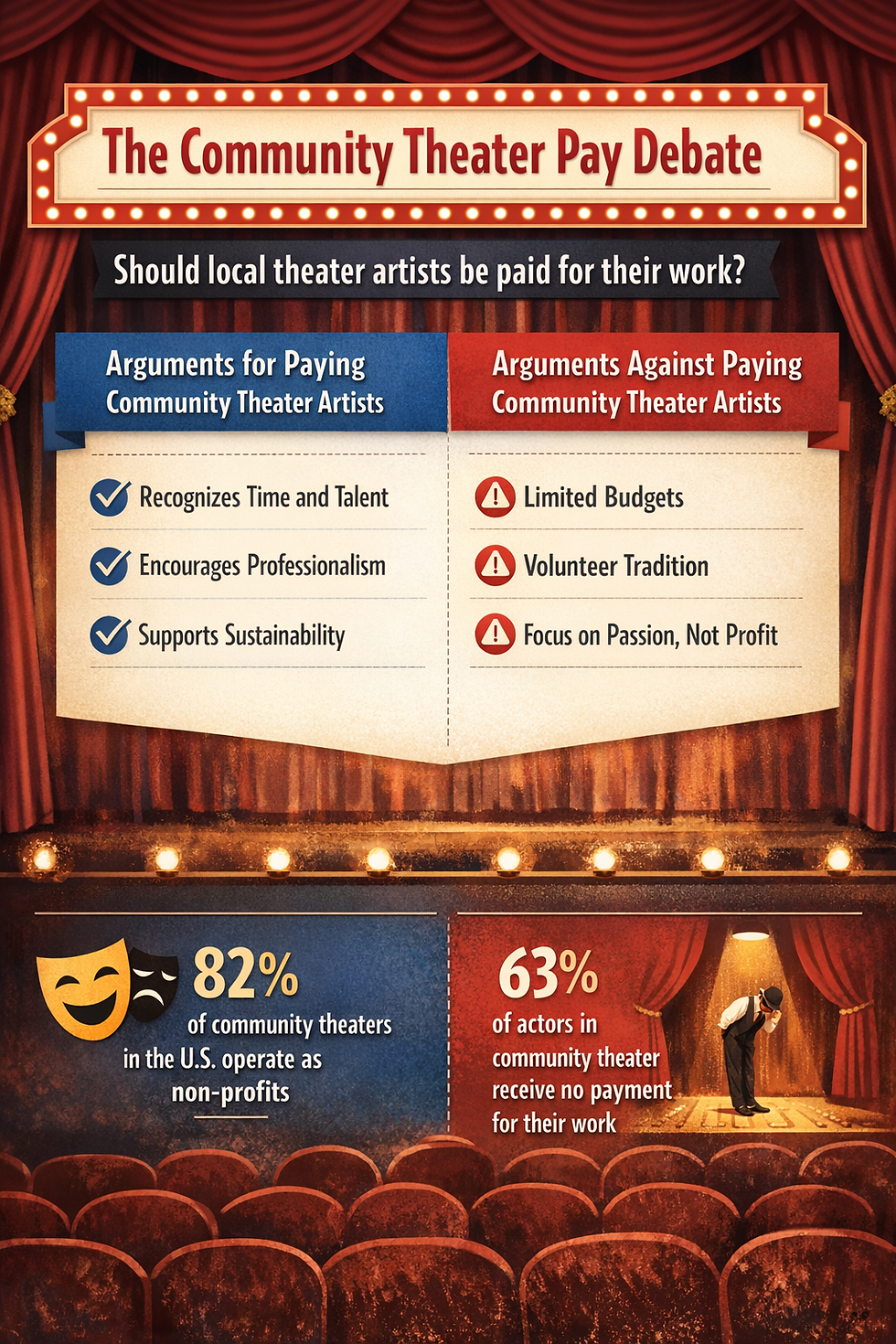
As the conversation around compensation in community theater continues, the future of these productions may depend on how communities choose to value the people behind the curtain. Whether rooted in tradition or evolving toward new models of support, the question remains open. What do you think? Should community theater artists be paid for their work, or is volunteerism part of what keeps the spirit of local theater alive? Join the conversation by sharing your thoughts and experiences on Facebook and Instagram at Floydflipdthescript, on TikTok at Toledofamous, or by visiting floydflipdthescript.com—because the next act in this story is still being written.

Comments