


After the Curtain Call: What’s Next for Paid Labor in Toledo’s Community Theater?
- Floyd Anderson
- Apr 26
- 2 min read
Following the publication of a previous report examining the ethics of unpaid labor in local theaterr CLICK LINK, tthe conversation across Northwest Ohio’s theater community has continued to evolve.
What began as a debate over whether artists should be paid has shifted toward a more complex question: How can community theaters realistically compensate performers and production teams while remaining financially sustainable?
A Continued Conversation
In the days since the story’s release, artists, organizers, and audiences have weighed in both online and in conversation, offering new perspectives on what the future of community theater could look like.
For many in the local theater scene, the discussion is long overdue.
While volunteerism has long been a foundation of community theater, some say economic realities are forcing a reevaluation of that tradition.
Dom Glover, an actor/director/choreographer, said the conversation reflects a growing awareness of the time and labor required to produce a show.
“We have the talent to back up the funding. We just need the funding to back up the talent.”
Their perspective echoes a broader trend in the arts industry, where conversations about fair pay are expanding beyond professional spaces and into community-based productions.
Funding and Sustainability
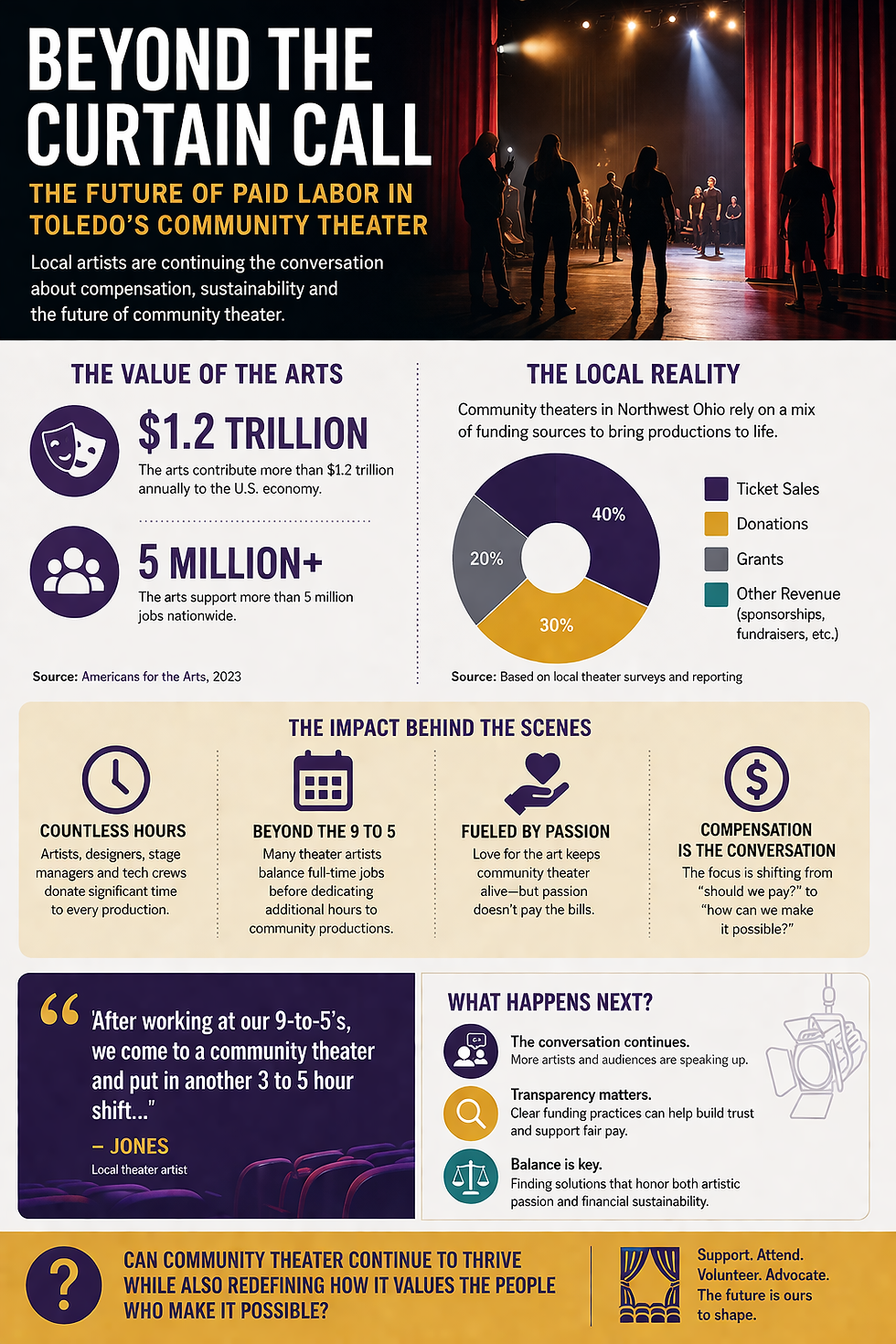
National data suggests the arts remain a significant economic driver, even as compensation for individual artists varies widely.
According to Americans for the Arts, the arts contribute more than $1.2 trillion annually to the U.S. economy and support more than 5 million jobs. Despite that impact, many artists—particularly at the local level—continue to face inconsistent or limited pay.
Community theaters in Northwest Ohio typically rely on a mix of ticket sales, donations and grants to fund productions. Some artists say increased transparency in how those funds are distributed could help address ongoing concerns about compensation.
Balancing Passion and Pay
As the discussion continues, some community members are advocating for a middle ground that acknowledges both financial limitations and the value of artists’ time.
“After working at our 9-to-5 jobs, we come to community theater and put in another three- to five-hour shift,” Jones said..
Others caution that requiring widespread compensation could reduce the number of productions theaters are able to stage, particularly for smaller organizations.
These perspectives underscore the complexity of the issue, as artists and organizations attempt to balance creative passion with financial realities
What Comes Next
No clear solution has emerged, but the conversation is gaining momentum.
As more artists speak out and audiences become increasingly aware of the labor behind each production, the future of community theater in Toledo may depend on finding a balance between tradition and sustainability.
For now, the central question remains:
Can community theater continue to thrive while redefining how it values the people who make it possible?
Comments